
Electric bikes have exploded in popularity, offering a fun and efficient way to get around. But with so many options available, understanding the different motor types can feel a bit overwhelming. Let’s break down the most common ebike propulsion systems, including the age-old rear hub vs. mid-drive debate, and demystify wattage in plain English.
The Two Big Players: Hub Motors vs. Mid-Drive Motors
When you’re looking at ebikes, you’ll primarily encounter two main motor configurations: hub motors and mid-drive motors.
1. Hub Motors
Hub motors are exactly what they sound like: motors integrated directly into the hub of a wheel, typically the rear wheel, but sometimes the front.
How they work: Inside the hub, electric coils create an electromagnetic field that spins the wheel. When you pedal, or use a throttle, the motor kicks in and provides power directly to the wheel, pushing you forward.
Types of Hub Motors:
- Geared Hub Motors: These use internal planetary gears to reduce the motor’s RPM, allowing for more torque at lower speeds, which is great for hills. They are often smaller and lighter.
- Gearless Direct-Drive Hub Motors: These motors have fewer moving parts, making them very durable and quiet. They provide consistent power and can also offer regenerative braking (charging the battery when you slow down). However, they tend to be heavier and less efficient at very low speeds.
Pros of Hub Motors:
- Simplicity & Cost-Effective: Generally less expensive to manufacture and easier to install, leading to more affordable ebikes.
- Independent Drive: Doesn’t put strain on your bike’s drivetrain (chain, cassette, derailleur).
- Good for Throttles: Often preferred for bikes that rely heavily on a throttle for propulsion, as they deliver power directly to the wheel.
- Easy Flat Repair (Front Hub): A front hub motor means your rear wheel is easier to remove for flat tires.
Cons of Hub Motors:
- Weight Distribution: Can make the bike feel rear-heavy (or front-heavy with a front hub motor), affecting handling.
- Limited Gearing: Doesn’t leverage the bike’s gears, so uphill performance can sometimes be less efficient compared to mid-drive.
- Rear Flat Repair (Rear Hub): Can make rear wheel removal for flats a bit more cumbersome due to the motor wiring.
Here’s an example of what a geared hub motor might look like integrated into a wheel:

2. Mid-Drive Motors
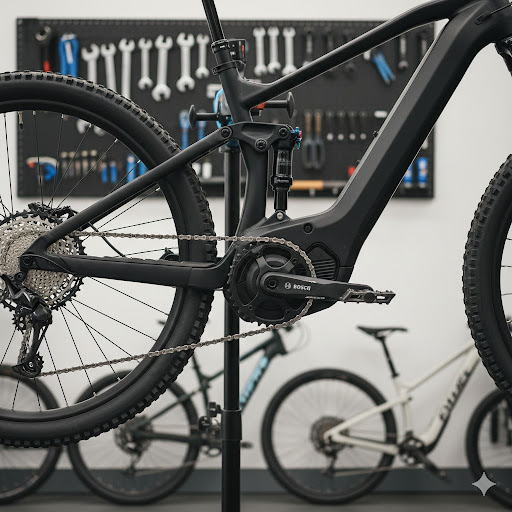
Mid-drive motors are centrally mounted in the frame, usually near the bottom bracket where your pedals attach.
How they work: Unlike hub motors, mid-drive motors power the chainring directly. This means the motor works with your bike’s existing gears. When the motor provides power, it’s amplified by your chosen gear, allowing for much more efficient climbing and better overall performance on varied terrain.
Pros of Mid-Drive Motors:
- Superior Torque & Hill Climbing: By utilizing the bike’s gears, mid-drives can deliver incredible power, making steep hills feel like molehills.
- Balanced Weight Distribution: Being centrally located, they keep the bike’s center of gravity low and balanced, leading to better handling and a more natural ride feel.
- Greater Efficiency: Especially on hilly terrain, mid-drives are generally more efficient, potentially extending your battery range.
- Easier Wheel Removal: Since the motor isn’t in the wheel, changing a flat or performing maintenance on either wheel is much simpler.
Cons of Mid-Drive Motors:
- Higher Cost: Mid-drive systems are more complex and expensive to manufacture, translating to higher ebike prices.
- Drivetrain Wear: Because the motor applies power directly to the chain and gears, it can accelerate wear on these components if not managed properly (e.g., shifting gears smoothly).
- Can Be Noisier: Some mid-drive motors can be slightly louder than their hub motor counterparts due to their internal gearing.
Here’s a visual of a mid-drive motor system on an ebike:
Other Propulsion Systems (Less Common but Worth Noting)
While hub and mid-drive dominate, there are a few other niche systems:
- Friction Drive: These motors use a roller to press against the tire and directly spin it. They are typically an aftermarket add-on and known for being less efficient, prone to slippage in wet conditions, and causing tire wear.
- Chain Drive (Front-Mounted): Some rare systems use a motor mounted near the front chainring, driving the chain directly. These are functionally similar to mid-drives but often less integrated.
Understanding Ebike Wattage (in Layman’s Terms)
You’ll see wattage figures like 250W, 500W, 750W, or even 1000W+ when looking at ebikes. But what does it actually mean for your ride?
What is Wattage (W)?
In simple terms, wattage is a measure of the motor’s power output. Higher wattage generally means a more powerful motor that can accelerate faster and climb hills more easily.
Common Wattages and What They Mean:
- 250W – 350W: This is the most common wattage range for Class 1 and Class 2 ebikes in many regions (especially Europe) where regulations limit continuous motor output. These motors provide a noticeable boost, making pedaling easier and extending your range without making the bike feel overly powerful. They’re great for commuters, casual riders, and those looking for a gentle assist.
- 500W – 750W: This range is very popular in North America, particularly for Class 3 ebikes. These motors offer a significant power increase, providing strong acceleration and making short work of steep hills. They’re excellent for riders who want more speed, carry heavy loads, or tackle challenging terrain. Many “off-road” or “all-terrain” ebikes fall into this category.
- 1000W+: You’ll typically find motors in this range on “off-road only” ebikes, specialized cargo bikes, or custom builds. These are incredibly powerful, often blurring the line between ebike and moped. They offer extreme torque and speed but are often not street-legal in many jurisdictions without specific licensing.
Important Considerations Beyond Just Watts:
- Peak vs. Continuous Power: A motor might be advertised as 750W, but that could be its peak power output for short bursts. Its continuous power output (what it can sustain without overheating) might be lower, say 500W. Always check for continuous wattage for a true comparison.
- Torque (Nm): While wattage is about power, torque (measured in Newton-meters, or Nm) is about rotational force – essentially, how much “push” the motor has to get you going and up hills. A motor with high torque will feel punchier, even if its continuous wattage isn’t the absolute highest. Mid-drive motors often excel in torque.
- Controller Amperage: The motor controller dictates how much power flows to the motor. A high-wattage motor paired with a low-amp controller won’t perform to its full potential.
Which Motor is Right for You?
The best motor type depends entirely on your riding style, budget, and where you plan to ride:
- For budget-conscious commuters, flat terrain, or throttle-heavy riding: A hub motor ebike will likely serve you well.
- For hilly terrain, off-road adventures, towing cargo, or a more natural, responsive ride feel: A mid-drive motor ebike is usually the superior choice, despite the higher cost.
Regardless of your choice, understanding these core components will empower you to make an informed decision and find the perfect ebike to electrify your adventures!