
The humble bicycle has come a long way, and with the advent of electric motors, it’s undergoing a revolutionary transformation. In just five years, the e-bike will evolve from a motorized pedal-assist device into a sophisticated, intelligent mobility solution, deeply integrated with our digital lives and urban environments.
By 2031, I expect to see a new breed of e-bikes defined by groundbreaking advancements in power, intelligence, safety, and security. Here are the five most advanced technological features poised to redefine the electric biking experience.
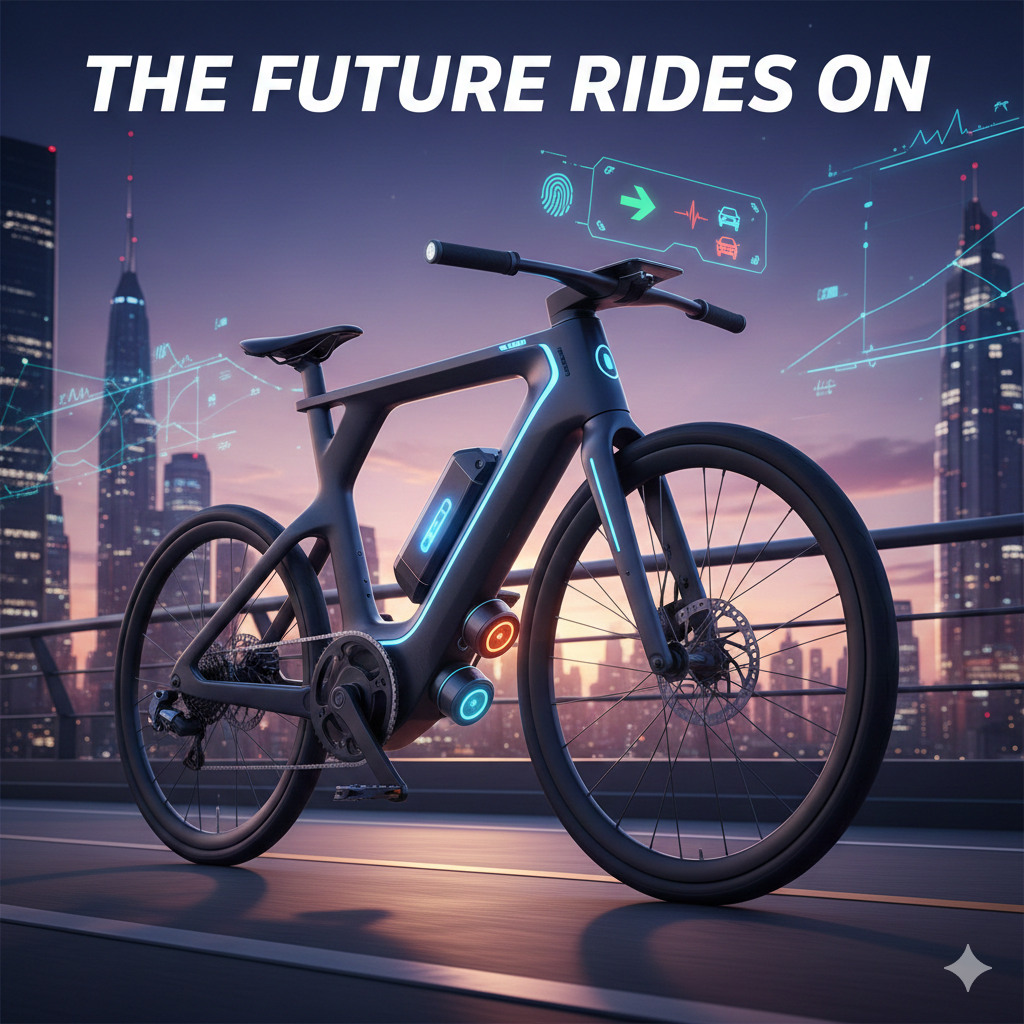
1. Solid-State and Graphene-Enhanced Batteries: Powering the Revolution
The Achilles’ heel of current electric vehicles—battery range and charging time—is rapidly being addressed. By 2031, premium e-bikes will largely jettison traditional lithium-ion batteries in favor of solid-state and graphene-enhanced alternatives. This shift promises a paradigm leap:
- Double the Energy Density: Imagine ranges exceeding 100 miles from a battery half the size and weight of today’s packs. This will free up design space and significantly reduce overall bike weight.
- Ultra-Fast Charging: Gone will be the overnight charges. Expect to top up 80% of your battery in under 15 minutes, making spontaneous long rides more feasible.
- Enhanced Safety: Solid electrolytes are non-flammable, virtually eliminating the thermal runaway risks associated with current e-bike batteries, boosting rider confidence.
Leading the Charge: Companies like Bosch (already a dominant e-bike system supplier) are heavily invested in next-gen battery tech, often through partnerships. Automotive battery innovators are also eyeing the e-mobility market, with specialized firms like StoreDot (known for extreme fast-charging) potentially licensing their tech to e-bike manufacturers.
2. AI-Driven “Auto-Pilot” Drivetrains: The Intelligent Ride
Manual gear shifting will become a relic for advanced e-bikes. The next generation will feature Predictive Automatic Shifting powered by sophisticated AI algorithms, creating an almost telepathic connection between rider and machine.
- Terrain Sensing: Utilizing advanced sensors, GPS data, and even topographical mapping, the bike will “see” inclines and descents ahead, proactively shifting gears before you even begin the climb or descent.
- Free-Shift Evolution: Building on concepts like Shimano’s early “Free Shift,” these systems will allow seamless gear changes while coasting or even stopped, ensuring you’re always in the optimal gear for immediate acceleration.
- Bio-Sync Integration: AI will monitor your real-time biometrics (e.g., heart rate, cadence) to autonomously adjust motor assistance, keeping you within desired fitness zones or ensuring sustained comfort on long journeys.
Innovators in Motion: Shimano and SRAM are the obvious leaders here, continuously refining electronic shifting. Expect significant AI integration from software specialists working with these drivetrain giants. Bosch’s Smart System is already laying the groundwork for more intelligent motor control and predictive assistance.
3. V2X (Vehicle-to-Everything) Safety Radar: A Sixth Sense for Cyclists
Safety will be dramatically enhanced through the integration of 360-degree situational awareness, a technology migrating directly from autonomous vehicles.
- Rear-Facing Radar: Embedded sensors will provide real-time alerts (via handlebar haptics or a Head-Up Display) about approaching vehicles, including their speed and proximity.
- Collision Avoidance: High-end models may even feature subtle “active steering” nudges or controlled braking to help mitigate potential collisions, especially in congested urban environments.
- Smart City Integration: E-bikes will communicate with smart infrastructure, receiving alerts about road hazards, predicting traffic light changes, and even “requesting” green lights to optimize flow and safety.
Pioneers in Protection: While primarily an automotive domain, Bosch is again a key player, having developed radar systems for cars that could easily scale down. Bike accessory companies like Garmin (with its Varia radar) are already demonstrating early versions of this tech, which will become fully integrated into the bike’s frame.
4. Regenerative Braking and Supercapacitors: Efficiency Reimagined
Currently a niche feature, Kinetic Energy Recovery Systems (KERS) will become a mainstream element, transforming how e-bikes manage power.
- Braking Re-Charge: E-bikes will efficiently capture and convert kinetic energy lost during braking or long descents back into usable electrical energy, significantly extending overall range, particularly in hilly or stop-and-go urban settings.
- Supercapacitor Boost: This recovered energy can be stored in supercapacitors, providing a rapid, high-power burst for instantaneous acceleration from a standstill or an extra push up a steep incline, all without straining the main battery.
Efficiency Engines: While the e-bike industry often licenses motor tech, firms like Mahle SmartBike Systems and even some in-house developments from major bike brands (e.g., Specialized’s own motor development) are exploring these energy recovery avenues. The miniaturization of supercapacitors by companies like Cap-XX will enable their widespread integration.
5. Biometric Security and “Invisible” Anti-Theft: Your Bike, and Only Yours
The days of cumbersome locks will begin to fade as e-bikes adopt sophisticated, integrated anti-theft measures.
- Biometric Activation: Fingerprint readers on handlebars or integrated facial recognition (perhaps via a small dashcam) will become the primary method to activate the motor, ensuring only the owner can ride.
- Remote Immobilization & “Bricking”: If a bike is stolen, owners will be able to remotely disable its motor and lock the wheels, rendering it useless. The bike could also transmit diagnostic data to aid recovery.
- Deep GPS Tracking: Advanced, covertly integrated GPS modules (not easily discoverable or removable) will provide constant, precise location tracking, even if the main battery is disconnected.
Guardians of the Ride: Bike brands like Specialized and Trek are already integrating advanced software and basic GPS tracking. However, the true innovation will come from partnerships with security tech firms and the deployment of purpose-built modules that are virtually tamper-proof, perhaps even leveraging low-power wide-area networks (LPWAN) for tracking.
The Road Ahead
The electric bike of 2031 will be a marvel of engineering and software—a smart, secure, and incredibly efficient machine that redefines personal urban mobility and recreational cycling. These advancements promise not just convenience but also unprecedented levels of safety, connectivity, and performance, transforming the way we move and interact with our world. The future of cycling is electric, intelligent, and closer than we think.